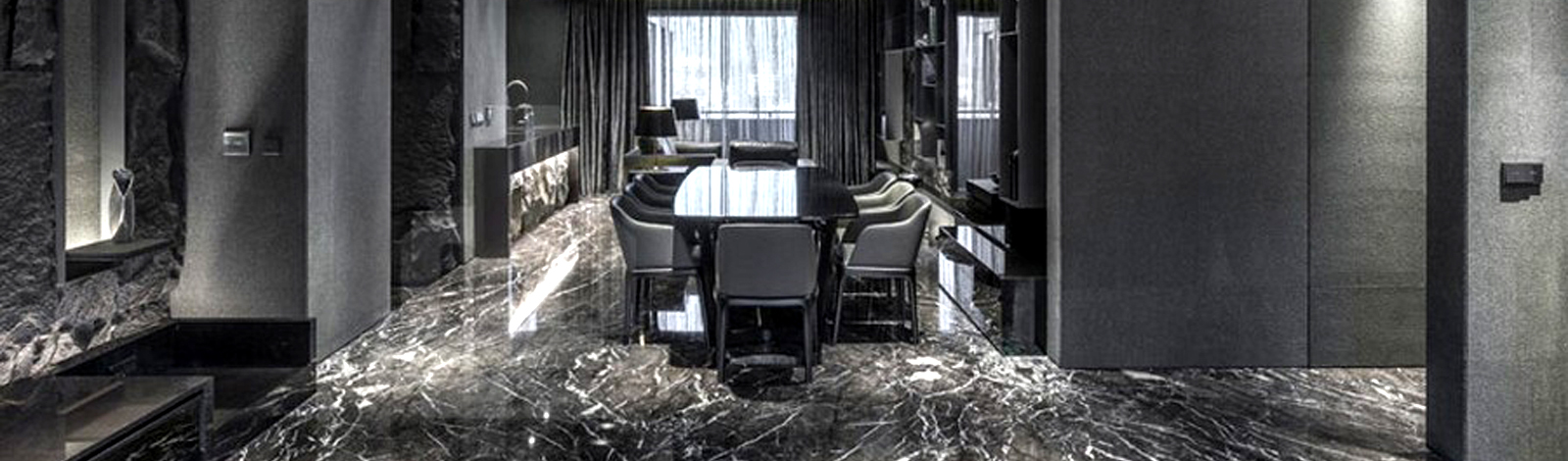
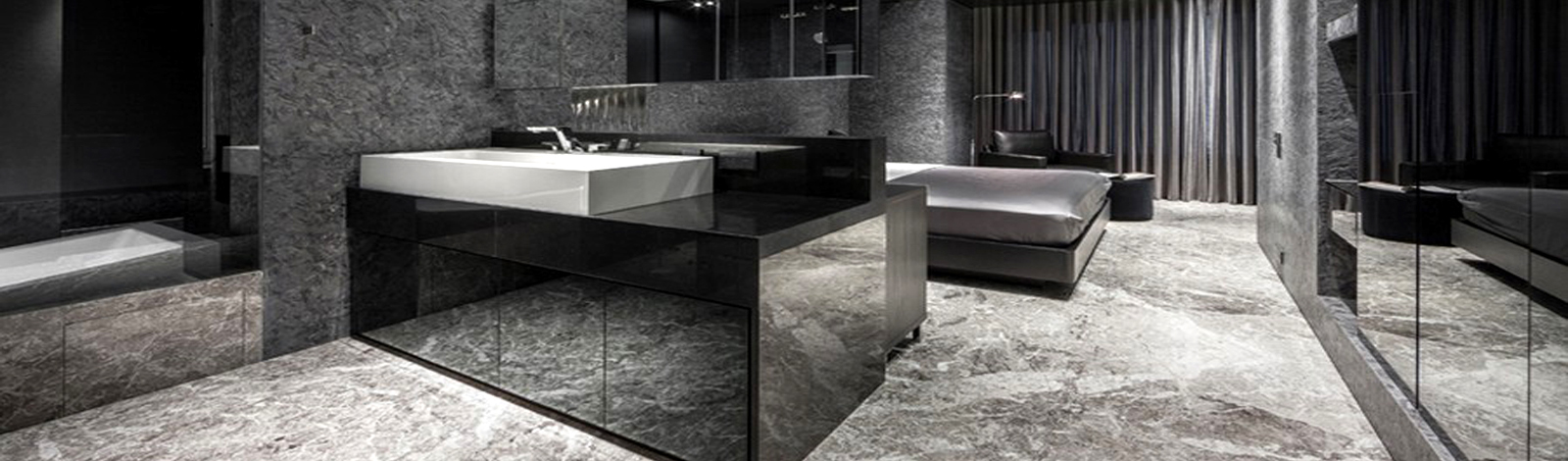
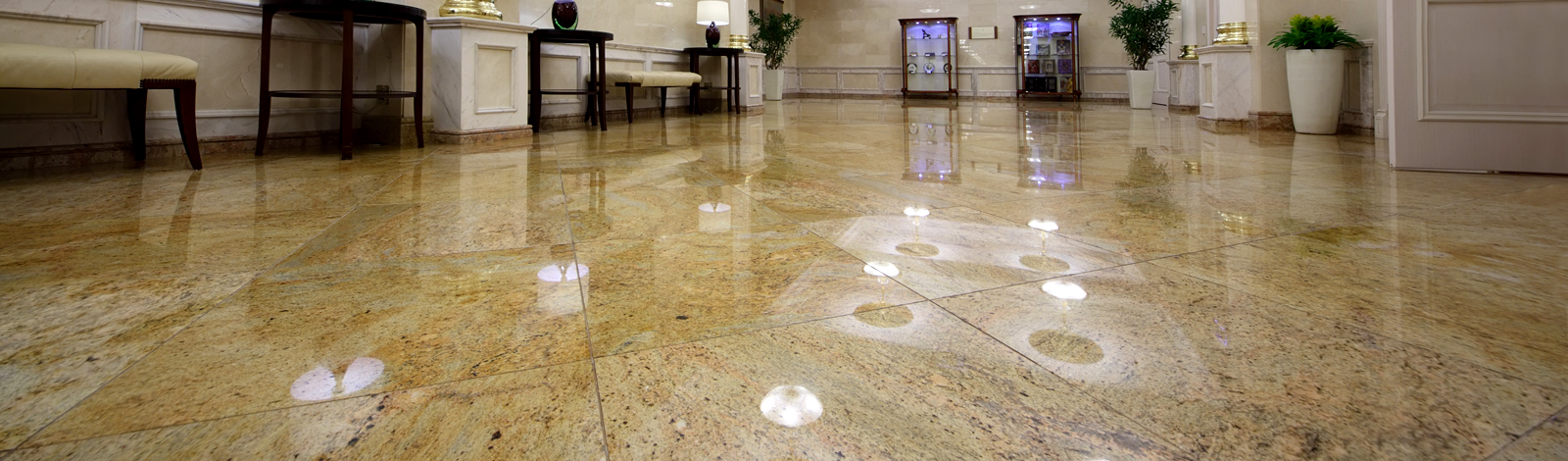
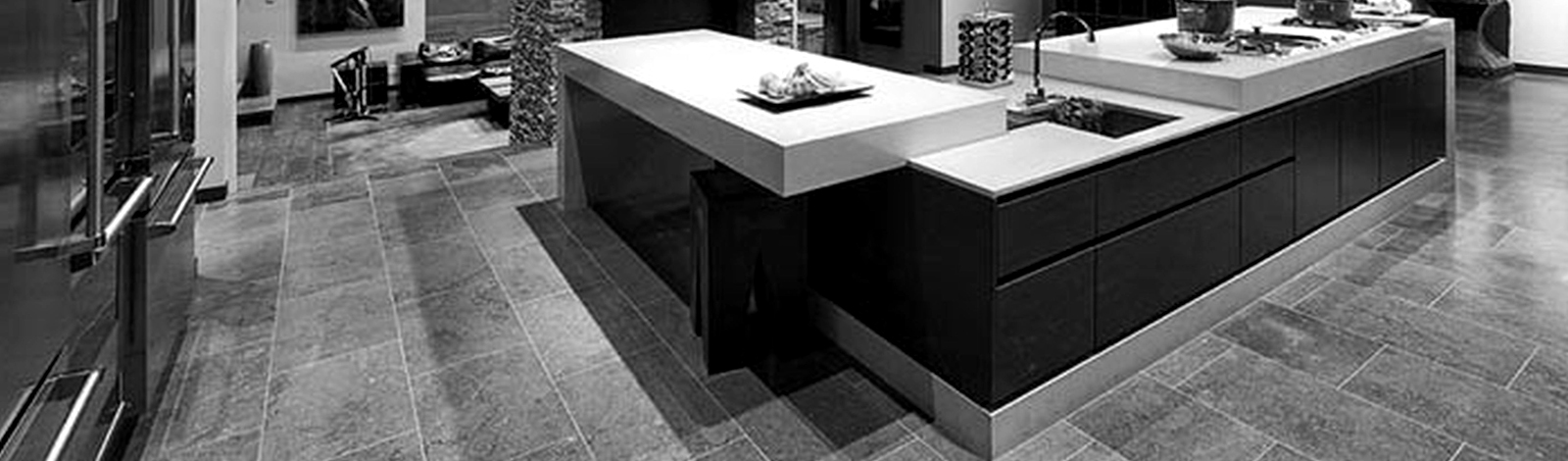
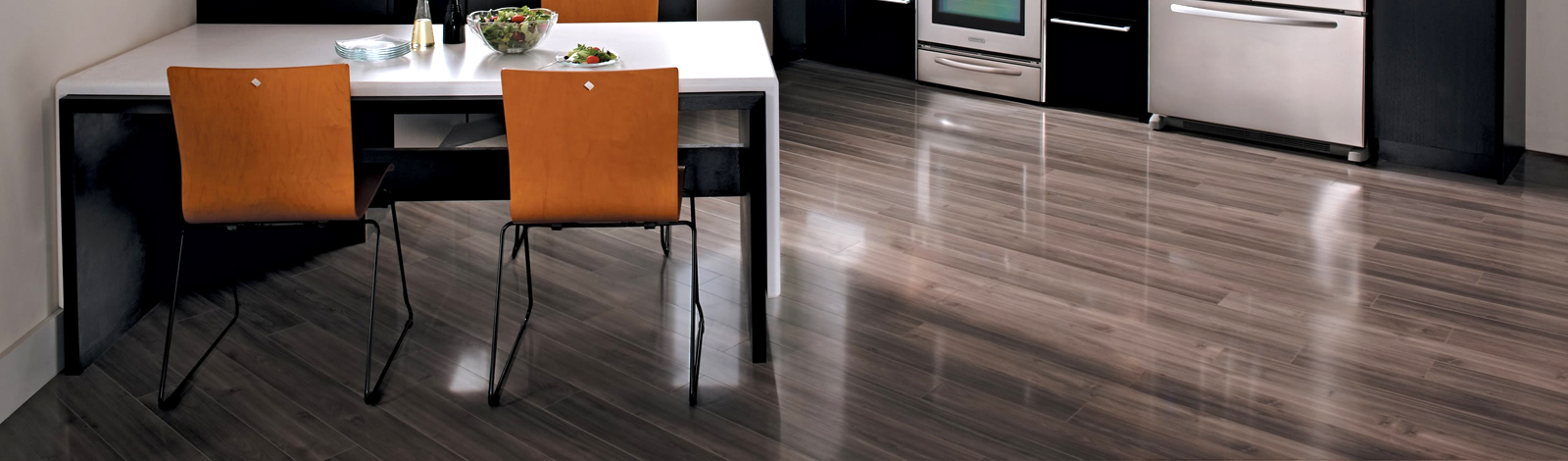
Edges of a tile or slab have different finishes and smoothness depending on the way they are cut. The edges play a major role in the overall appearance of the architecture they are used in. Tiles or slabs with fine edges can enhance the way ceiling, flooring or any other exterior or interior looks.
Basically there are three different edge finishes available, which are as follows: |
| |
 Machine cut / Sawn Edges Machine cut / Sawn Edges |
| Hand chiseled / Hand dressed Edges |
|
Chamfered / Beveled Edges |
| |
|
Machine cut / Sawn Edges |
Tiles or slabs with machine cut / sawn edges are the commonly used types of edges. The fine edge finish simplifies the work of the fitter as these slabs or tiles fit perfectly. The machine cut / sawn edges slabs are subjected to a high speed rolling cutter blade to get a very smooth edge surface with a complementary (90°) angle at the vertices of the tiles/slabs. |
| ----------------------------------------------------------------------------------------------------------------------------------------------------------------------------------------------- |
|
Hand Chiseled Edges |
Hand chiseled or hand dressed edges are best suited for exterior walls and pavements. This type of tiles is first cut into different sizes and then, the professional worker works upon it to achieve the smoothness. This edge finish is very much similar to natural surface finish and hand dressed edges are a good combination with natural surface finish. |
|
----------------------------------------------------------------------------------------------------------------------------------------------------------------------------------------------- |
|
Chamfered Edges |
The chamfered edge slabs looks classic on exterior walls or any part of interior. These slabs are most commonly find place in kitchen tops or on table tops. Chamfering the edges requires two processes of sawing and polishing. Chamfering removes the shine and whiteness of sawn edges. |
| |
| |